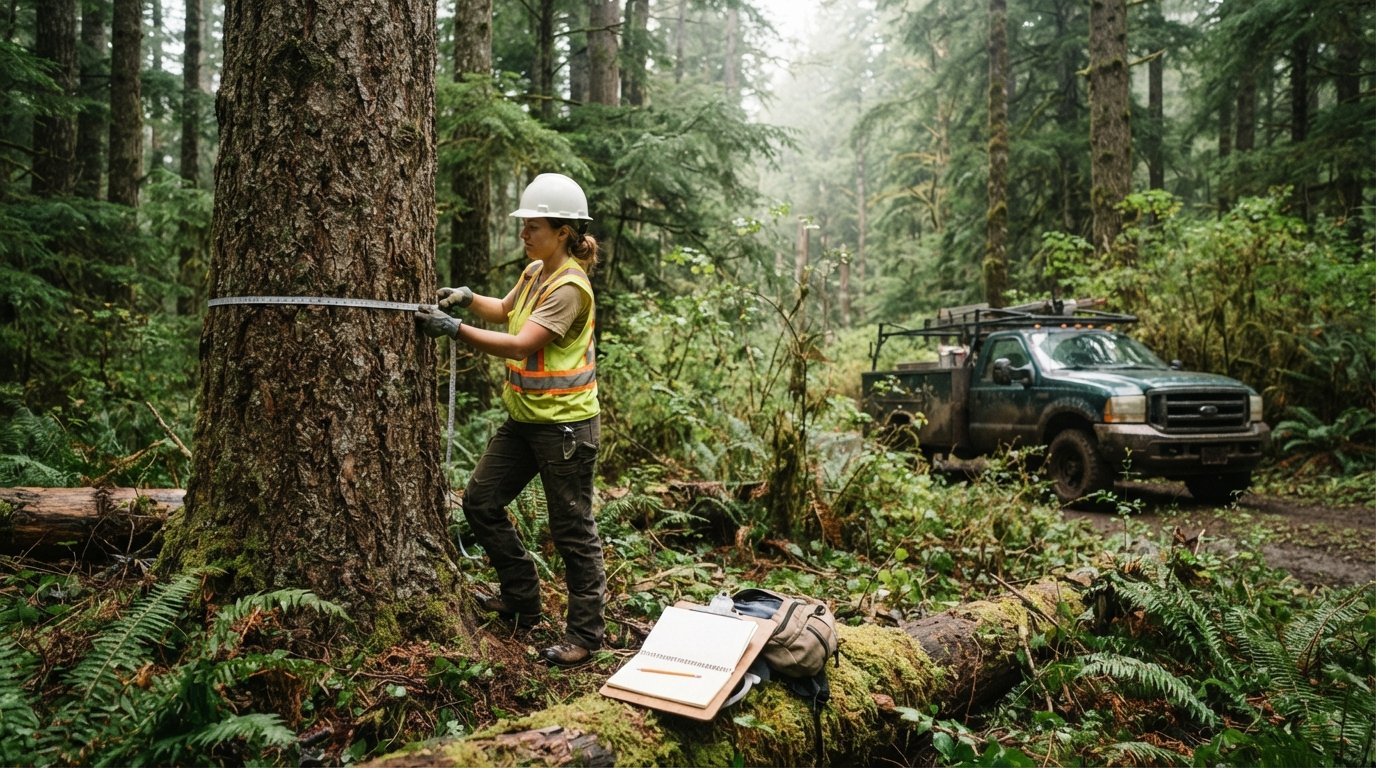
Forestry Technician Job Requirements: What Employers Expect
Forestry technician job requirements explained: education, certifications, field experience, and physical standards that employers screen for.

By Hyun Kim

Loading…
Career guides, job search notes, and education options from Careers.org. No account required.
Forestry technician job requirements explained: education, certifications, field experience, and physical standards that employers screen for.
By Hyun Kim
A forestry technician spends more time in the field than almost any other natural resources professional. These technicians collect timber data, mark boundaries, survey wildlife habitat, fight fires, and maintain trails across millions of acres of public and private land. If the idea of working outdoors in remote forests appeals to you, understanding the forestry technician job requirements is the first step toward building a realistic career plan. Federal agencies, state forestry departments, private timber companies, and conservation organizations all hire technicians, and each has its own mix of education, experience, and physical standards. This guide breaks down what employers actually look for, from entry-level seasonal positions to permanent technician roles with promotion potential.
The job title forestry technician covers a wide range of duties. In one district you might spend the season cruising timber to estimate volume and quality. In another you could work on a fire crew, conduct prescribed burns, or inventory invasive species. Because the work varies so much, employers set different requirements depending on the specific assignment. A timber technician needs strong measurement and mapping skills, while a fire technician needs the physical fitness and certifications required for wildland firefighting. Before you evaluate any job posting, read the duties section carefully and match your preparation to the actual work described.
Most forestry technician job requirements fall into four broad categories: education, experience, physical capability, and specialized credentials. Education often includes a high school diploma at minimum, with an associate or bachelor's degree preferred for permanent or advanced roles. Experience can come from seasonal jobs, internships, or military service. Physical requirements are usually explicit because the work involves hiking long distances, carrying heavy equipment, and enduring harsh weather. Specialized credentials include first aid, chainsaw safety, pesticide applicator licensing, and wildland firefighting certifications. The strongest applicants demonstrate competence across all four areas, not just one.
It also helps to understand the difference between federal and private hiring. Federal agencies such as the U.S. Forest Service, Bureau of Land Management, and National Park Service use standardized position classifications and qualification standards. Private timber companies and consulting firms often have more flexibility but may prioritize production skills and equipment operation. State forestry agencies fall somewhere in between. Knowing which type of employer you are targeting helps you decode the requirements faster and prepare the right application materials. If you are still deciding between related roles, exploring accredited college and university programs can clarify which credential matches your target position.
At the entry level, many seasonal forestry technician jobs require only a high school diploma or equivalent. However, the most competitive candidates hold at least an associate degree in forestry, natural resources, or a closely related field. An associate degree typically takes two years and covers dendrology, forest measurements, silviculture, and mapping. For permanent federal positions, the qualification standard often allows a combination of education and experience, but a bachelor's degree in forestry from an accredited program gives you the strongest footing. Coursework in biology, ecology, statistics, and geographic information systems is especially valuable.
Federal hiring rules can be strict about what counts as qualifying education. The U.S. Forest Service, for example, may require specific credit hours in forestry, range management, or natural resources to meet the basic qualification for a technician grade. That means a general biology degree might not satisfy the requirement even if it is science-heavy. Check the education section of each announcement and keep transcripts handy. If your degree is in a related field, you may need to document how specific courses align with the job's coursework requirements. Community college forestry programs are a practical route because they are designed around these standards and often include field labs.
Beyond the degree itself, coursework in GIS and remote sensing has become increasingly important. Modern forestry technicians use GPS units, drones, and mapping software daily. Earning a certificate in GIS alongside your forestry coursework can set you apart. Similarly, business and communication courses help if you plan to move into crew leadership or landowner assistance. For readers mapping out the education path, the key is to choose a program that combines classroom instruction with hands-on field training. Programs that arrange summer internships or cooperative work experiences give you the documented experience that employers value in the hiring process.
Experience requirements scale with the position. Seasonal entry-level jobs may ask for no prior professional experience, but they expect you to show familiarity with outdoor work through volunteering, coursework, or personal projects. Mid-level technician positions often require one to two years of related experience, and lead technician roles may require three or more years plus demonstrated ability to supervise others. Internships with state forestry agencies, conservation corps programs, and university research projects all count toward this requirement. Document your hours and duties carefully, because federal applications often require specific start and end dates.
Several credentials appear repeatedly in job postings and can give you a decisive advantage. The most common ones include:
These credentials signal that you can work safely and independently, which matters when crews are spread across large districts. If you are aiming for fire work, plan ahead because the fitness test and training courses have specific windows. For non-fire roles, chainsaw and first aid certifications are usually the fastest way to strengthen an application. Keep copies of every certificate and card, and list them clearly on your resume. Employers often screen applicants on these items before they ever review the rest of the application.
Forestry technician job requirements include a physical component that is more demanding than most office-based careers. You should expect to hike several miles per day over uneven terrain, carry a pack and field equipment, and work in heat, cold, smoke, and rain. Many postings include a medical examination or a work capacity test, and fire positions require passing a standardized pack test within a time limit. Vision and hearing standards may apply for driving and equipment operation. Being honest with yourself about your fitness level before applying saves time and reduces the risk of injury during training.
Practical skills matter just as much as physical stamina. Employers look for comfort with maps, compasses, and GPS units, the ability to record accurate field data, and basic computer skills for entering and checking data. Good judgment in remote settings is essential because crews often work far from supervision. If you have experience with hand tools, chainsaws, or off-road vehicles, highlight it. The same goes for any experience leading small groups, teaching volunteers, or communicating with landowners. These soft skills are often what separate a good field technician from a great one, especially when a position involves public contact or partnership work.
Applicants should also prepare for background checks and driving record reviews. Federal and state agencies conduct background investigations, and positions that involve driving government vehicles require a clean or acceptable driving record. Some roles involve random drug testing, particularly in fire and law enforcement-adjacent programs. These checks are standard and should not discourage qualified candidates, but knowing about them in advance prevents surprises during the hiring process.
Once you understand the requirements, the next step is packaging your qualifications in a way that survives screening. Federal applications are notoriously detailed: you must show the hours per week and the exact duties for each relevant job. Vague descriptions like helped with forest work will not earn credit. Instead, write specific statements such as measured timber volume on 500-acre sales using clinometers and GPS, or served on a five-person fire crew for two seasons with red card certification. Private employers appreciate the same specificity, plus a short summary of your equipment and software skills.
A practical way to prepare is to build a requirements checklist for each target job and map your background against it. Start with these steps:
This process also helps you decide whether an additional degree or certificate is worth the investment. If you are considering a return to school, using a program matching service such as CollegeDegree.Education can help you compare accredited options in forestry, natural resources, and GIS. The goal is not to collect credentials for their own sake but to close the specific gaps that stand between you and the jobs you want. A focused two-year degree often beats an unfocused four-year one when the hiring standard is tied to specific coursework and field hours.
Forestry technician job requirements change as you move up. Entry-level technicians focus on data collection and crew support, while senior technicians supervise crews, manage contracts, and coordinate with biologists, engineers, and planners. Advancement usually requires a combination of experience, additional certifications, and sometimes a bachelor's degree. Federal technicians can move up through grade levels, and some pursue conversion to professional forestry positions after completing a degree and gaining experience. State and private employers often promote from within, so reliability and safety records carry real weight.
Demand for technicians remains steady because forests need continuous management for wildfire risk, timber production, recreation, and habitat. Seasonal work is common, and many people string together multiple seasons before landing a permanent position. That path is normal in this field, but it requires planning for income gaps and housing during the off-season. Candidates who understand this rhythm and prepare for it are more likely to persist and succeed. Certifications that broaden your eligibility, such as fire qualifications or GIS skills, make it easier to move between agencies and regions as opportunities open.
Finally, treat the requirements as a roadmap rather than a barrier. Every certification and every season of field experience moves you closer to the job you want. Start with the education and credentials that appear most often in postings, build documented field experience through internships or seasonal work, and keep your application materials specific and honest. Forestry technicians play an essential role in caring for public and private lands, and the employers who hire them are looking for people who show up prepared, work safely, and keep learning. With a clear plan, the requirements become achievable steps rather than obstacles.
This block is reserved for sponsored schools from the education listing partner. That connection is not set up for this site, so no school names, program offers, or request form can be shown.