
How to Become a Radiologic Technologist: Step-by-Step
Follow the steps to become a radiologic technologist, from accredited programs to certification, and start a stable healthcare career in about two years.

By Manuel Rivera
If you have ever had an X-ray, a CT scan, or an MRI, a radiologic technologist likely guided you through it. These allied health professionals operate imaging equipment, position patients, and ensure that physicians get clear images to diagnose injuries and illnesses. Demand for their skills is steady, and the path to enter the field is shorter than many other healthcare careers. If you are asking how to become a radiologic technologist, this guide walks you through every step, from high school coursework to certification and beyond.
Radiologic technologists, often called radiographers, work in hospitals, outpatient imaging centers, and physicians' offices. They are not radiologists (those are physicians), but they are essential members of the diagnostic team. The job offers direct patient contact, technical challenge, and the satisfaction of helping people when they are most vulnerable. The Bureau of Labor Statistics projects solid job growth for radiologic and MRI technologists through the decade, making it a practical choice for career changers and students alike.
What Does a Radiologic Technologist Do?
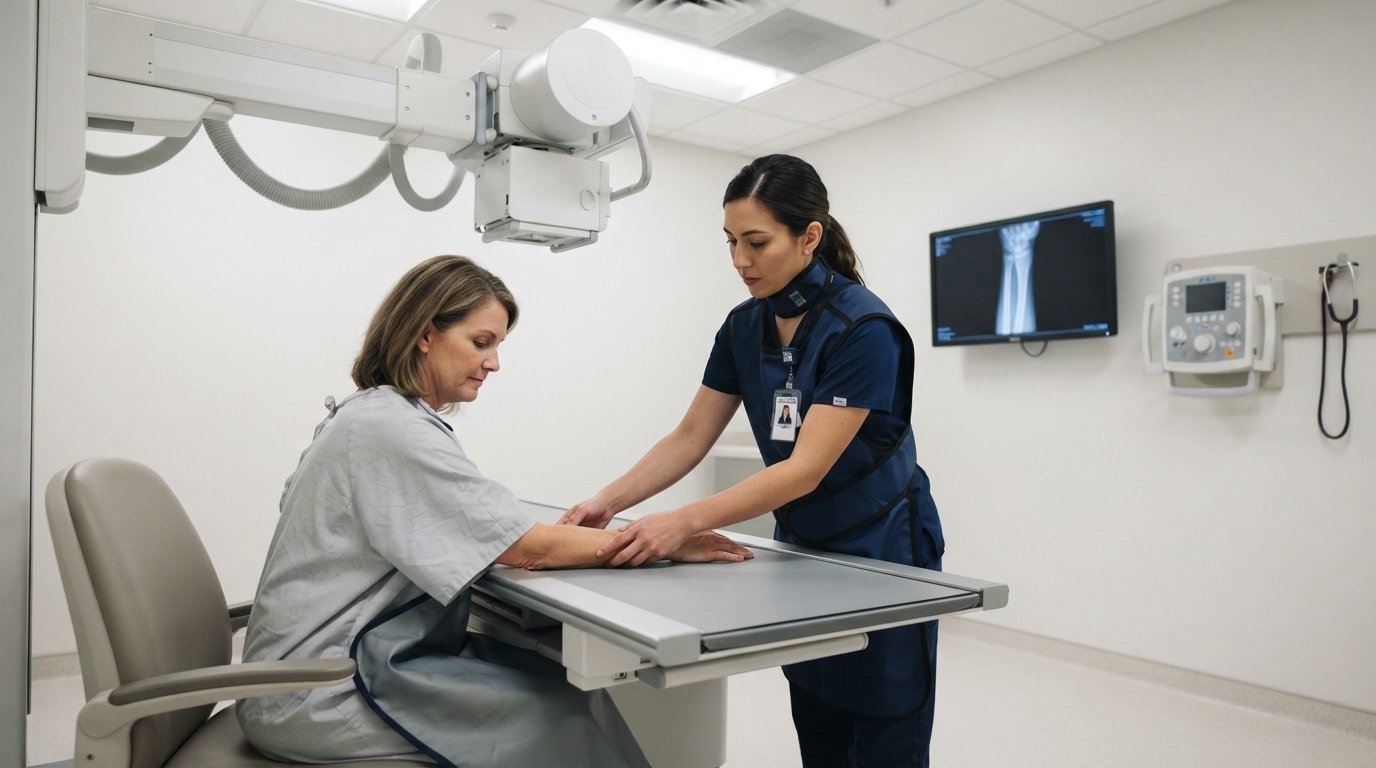
Before diving into the steps, it helps to understand the daily reality of the job. Radiologic technologists prepare patients for imaging procedures, explain the process, and position the patient correctly to capture the needed images. They operate X-ray machines, computed tomography (CT) scanners, magnetic resonance imaging (MRI) machines, and sometimes mammography or fluoroscopy equipment. They also protect patients and themselves from unnecessary radiation exposure by following safety protocols and using shielding devices.
The work requires attention to detail, physical stamina, and strong communication skills. Technologists must put anxious patients at ease, especially children or those in pain. They also need to recognize when an image is not clear enough for the radiologist and adjust accordingly. Most technologists work full time, and some work evenings, weekends, or on-call shifts because hospitals operate around the clock. It is a hands-on role that blends technology with human care.
Radiologic technologists also maintain equipment, keep patient records, and sometimes assist with more advanced procedures like fluoroscopy or interventional radiography. The field offers opportunities to specialize, which can lead to higher pay and more responsibility.
Step 1: Complete High School or a GED
Your journey starts in high school. While there is no single required major, focusing on science and math will serve you well. Courses in biology, chemistry, physics, and algebra build the foundation you will need in a radiologic technology program. Some high schools offer health science or allied health programs that introduce medical terminology and basic patient care, which can give you a head start.
If you have already graduated or earned a GED, you are on equal footing with other applicants. Colleges and program admissions teams care about your overall GPA and your grasp of science, not the specific name of your high school diploma. Strong grades in science classes can improve your chances of admission to competitive programs.
Outside the classroom, consider volunteering at a local hospital or clinic. Even non-clinical roles like front desk assistance can expose you to the healthcare environment and confirm your interest in patient care. These experiences also look good on program applications.
Step 2: Enroll in an Accredited Radiologic Technology Program
The most important educational step is completing a program in radiologic technology accredited by the Joint Review Committee on Education in Radiologic Technology (JRCERT). Accreditation matters because it ensures the program meets quality standards and, more importantly, allows you to sit for national certification exams after graduation. Without an accredited program, your path to certification and licensure becomes much more complicated.
You have two main educational routes: an associate degree or a bachelor's degree. Most radiologic technologists enter the field with an associate degree from a community college or technical school. These programs typically take two years to complete and include a mix of classroom instruction and supervised clinical experience. Bachelor's degree programs, often offered by universities, take four years and may include more advanced coursework in management or specialized imaging modalities. They can be a good choice if you plan to move into leadership or education later.
Admission requirements vary. Many programs require a high school diploma or GED, a minimum GPA, and completion of prerequisite courses in math and science. Some programs have waiting lists, so it pays to research early and apply broadly. When comparing programs, look for strong clinical partnerships with local hospitals, because hands-on experience is where you truly learn the job.
For those considering other healthcare careers, our guide on how to become a registered nurse offers a useful comparison of educational pathways. Nursing and radiologic technology both require patient care skills but differ significantly in scope and training length.
Associate vs. Bachelor's Degree: Which Is Right for You?
Choosing between an associate and a bachelor's degree depends on your timeline, budget, and career goals. An associate degree gets you into the workforce faster and with less student debt. You can always return for a bachelor's later, sometimes with employer tuition assistance. A bachelor's degree may give you a competitive edge for specialized roles or advancement into management, but it is not required for entry-level positions.
Here is a quick comparison to help you decide:
- Associate degree: about 2 years, lower cost, entry-level eligibility, strong clinical focus.
- Bachelor's degree: about 4 years, higher cost, broader education, better preparation for leadership or advanced modalities.
Some students start with an associate degree and later complete a bachelor's completion program online or part time. That approach balances earning power with long-term growth. Whichever route you choose, make sure the program is JRCERT-accredited and includes substantial clinical rotations.
Step 3: Gain Clinical Experience and Complete the Program
Clinical rotations are the heart of your training. You will work under the supervision of licensed technologists and radiologists, performing actual exams on real patients. This is where you learn patient positioning, equipment operation, radiation safety, and the soft skills of bedside manner. You will also learn to handle emergencies, manage patient anxiety, and work as part of a healthcare team.
Programs typically require a minimum number of clinical hours, and you must demonstrate competency in specific procedures before you can graduate. Take these rotations seriously: they are essentially a long job interview. Many students receive job offers from their clinical sites before graduation. Build relationships with supervisors and ask questions. The technologists you work with can become mentors and references.
Besides technical skills, clinical experience teaches you how to communicate with diverse patients. You might encounter patients who are frightened, in pain, or unable to hold still. Learning to calm them and explain the procedure clearly is as important as operating the machine. These human skills will set you apart in the job market.
Step 4: Earn National Certification
After graduating from an accredited program, the next step is certification. The most widely recognized credential is the Registered Radiologic Technologist (RT(R)) designation from the American Registry of Radiologic Technologists (ARRT). To earn it, you must pass the ARRT exam in radiography. The exam covers radiation protection, equipment operation, image production, patient care, and procedures. It is computer-based and offered year-round at testing centers.
Certification is not always legally required, but most employers prefer or require it. It demonstrates that you meet professional standards and have the knowledge to practice safely. Maintaining certification requires ongoing continuing education and adherence to ethics requirements. Some states also have licensure requirements, which may include passing a state exam or verifying ARRT certification. Always check your state's specific rules.
Beyond radiography, you can earn additional certifications in modalities like CT, MRI, mammography, or bone densitometry. These advanced credentials often come with pay increases and expanded job opportunities. Many technologists pursue them after gaining some work experience.
Step 5: Obtain State Licensure (If Required)
Not all states require a license to work as a radiologic technologist, but many do. Licensing requirements vary, so check with your state's health department or radiation control board. Typically, licensure involves submitting proof of graduation from an accredited program, passing the ARRT exam, and paying a fee. Some states have additional requirements, such as background checks or jurisprudence exams.
If you plan to move between states, be aware that licensure is not automatically transferable. You may need to apply for licensure by endorsement, which generally recognizes your existing credentials. The ARRT offers a state licensure lookup tool to help you understand requirements. Staying informed about licensure keeps you employable and compliant.
Even if your state does not require a license, earning ARRT certification is still highly recommended. It signals professionalism and is often a condition of employment. Employers in states without licensure may still require certification as a condition of hiring.
Step 6: Find Your First Job and Consider Specialization
With certification in hand, you are ready to job search. Hospitals, imaging centers, orthopedic clinics, and urgent care facilities hire radiologic technologists. Your clinical rotations may have already given you leads. Update your resume to highlight clinical experience, procedures performed, and any special skills like operating specific equipment. Prepare for interviews by reviewing common questions and being ready to discuss patient care scenarios.
The job market for radiologic technologists is generally strong, but competition varies by location. Urban areas may have more openings but also more applicants. Rural areas sometimes offer incentives to attract technologists. Be open to different work settings, including part-time or PRN (as needed) positions, which can be a foot in the door.
Once employed, think about specialization. Additional training in CT, MRI, or mammography can lead to higher pay and more interesting work. Some technologists move into education, management, or equipment sales. The field offers multiple career ladders. Many employers offer tuition reimbursement for advanced certifications, so take advantage of those benefits.
If you are also considering medical school, our article on how long it takes to become a doctor explains the lengthy path to becoming a radiologist or other physician. Radiologic technology is a faster route to working in medical imaging, though with a different scope of practice.
How Long Does It Take to Become a Radiologic Technologist?
The timeline from start to first job is relatively short. An associate degree program typically takes two years of full-time study, including summers in some cases. A bachelor's degree takes four years. After graduation, you need to pass the ARRT exam, which you can schedule within a few weeks. State licensure, if required, may add a few weeks to a few months. Overall, you can be working as a radiologic technologist in as little as two to three years after high school.
For career changers, the timeline depends on whether you need to complete prerequisite courses. Some programs offer accelerated options for students who already have a degree in another field. These programs may take 18 to 24 months. Financial aid and scholarships can help offset costs. For example, Scholarship.Education offers a database of scholarships and financial aid opportunities for students in the US, UK, Canada, Australia, and the EU, which can reduce the cost of your radiologic technology education.
Key Skills and Qualities for Success
Beyond formal education, certain personal qualities help radiologic technologists thrive. Attention to detail is critical because a slight positioning error can result in a repeat scan and extra radiation exposure. Physical stamina is needed because technologists are on their feet, moving patients and equipment. Compassion and communication skills are essential for working with anxious or injured patients. Technical aptitude helps with operating complex machines and troubleshooting issues.
Problem-solving skills come into play when a patient cannot hold a position or when equipment malfunctions. Teamwork is also important because technologists collaborate with radiologists, nurses, and other staff. If you enjoy working with people and technology in a fast-paced environment, this career can be a great fit.
Here are some key traits to cultivate:
- Detail orientation for precise patient positioning.
- Physical stamina for lifting and standing.
- Empathy and clear communication for patient care.
- Technical curiosity for learning new imaging modalities.
These soft skills are often as important as technical knowledge in hiring decisions. Employers look for technologists who can represent their facility well and keep patients comfortable.
Salary and Job Outlook
According to the Bureau of Labor Statistics, the median annual wage for radiologic technologists and MRI technologists was around $64,000 in recent data, with the highest 10 percent earning over $90,000. Salaries vary by location, experience, and specialization. Technologists certified in multiple modalities or working in high-cost areas tend to earn more. Hospitals often pay more than physician offices, and evening or weekend shifts may include differential pay.
Job outlook is positive. An aging population increases demand for medical imaging, and technologists are needed to operate the equipment. The BLS projects employment of radiologic and MRI technologists to grow faster than the average for all occupations over the next decade. This growth, combined with retirements, should create steady job openings.
It is important to note that salary and job placement are not guaranteed. They depend on many factors, including your performance, location, and market conditions. Careers.org does not guarantee outcomes, but we provide information to help you make informed decisions.
Advancing Your Career
After a few years on the job, you may want to advance. Options include specializing in a modality like CT or MRI, which often requires additional certification and clinical experience. You could move into a lead technologist role, supervising other technologists. Some pursue a bachelor's or master's degree in healthcare administration or education to move into management or teaching. Others become application specialists for equipment vendors, training others on new machines.
Continuing education is a constant in healthcare. ARRT requires 24 credits of continuing education every two years to maintain certification. Many employers support this by offering in-house training or tuition reimbursement. Taking advantage of these opportunities keeps your skills current and opens doors.
If you are interested in other healthcare roles that require less or different training, explore our career guides. The path to becoming a radiologic technologist is one of many in the allied health field.
Common Questions About Becoming a Radiologic Technologist
Do I need a bachelor's degree to become a radiologic technologist?
No, an associate degree from an accredited program is the minimum requirement for most entry-level positions. However, a bachelor's degree can be beneficial for advancement.
Is radiologic technology a good career for career changers?
Yes, many career changers enter the field through associate degree programs. The training is focused and can be completed in about two years, making it accessible for adults returning to school.
What is the difference between a radiologic technologist and a radiologist?
A radiologist is a medical doctor who interprets images and diagnoses conditions. A radiologic technologist operates the imaging equipment and positions patients, working under the radiologist's supervision.
Understanding these distinctions helps you choose the right path. If you want to interpret images and make diagnoses, medical school is required, which is a much longer journey. If you want hands-on technical work with patients, radiologic technology is a direct route.
Becoming a radiologic technologist is a achievable goal with clear steps. By focusing on accredited education, clinical experience, and certification, you can build a rewarding career in medical imaging. Whether you are a recent high school graduate or a career changer, the field offers stability, growth, and the chance to make a difference in patients' lives.