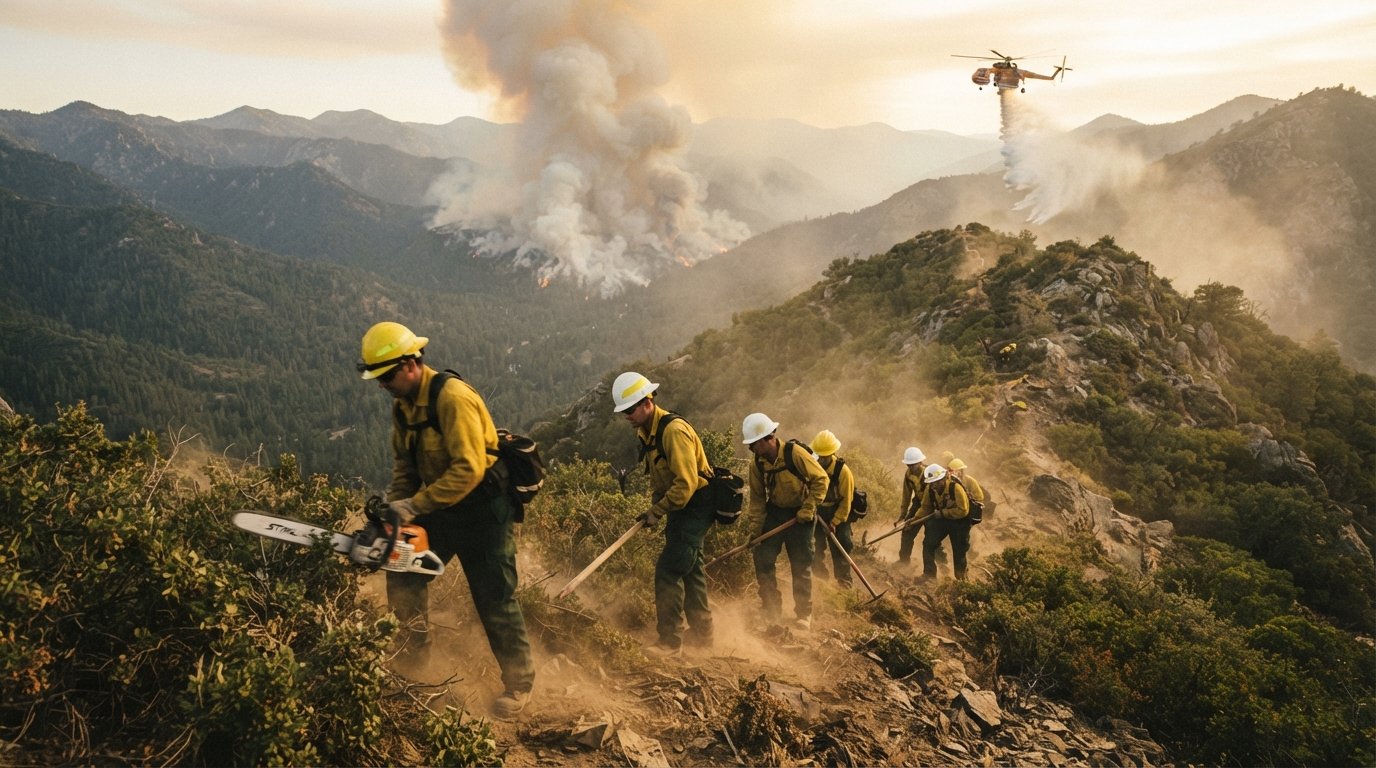
Wildland Firefighter Jobs Explained: Careers on the Fireline
Wildland firefighter jobs explained: the roles, pay, hiring steps, and training you need to start a career on the fireline.

Loading…
Career guides, job search notes, and education options from Careers.org. No account required.
Wildland firefighter jobs explained: the roles, pay, hiring steps, and training you need to start a career on the fireline.
Every summer, as smoke columns rise over national forests and rural communities, thousands of people answer a call that few civilians fully understand. Wildland firefighters do not just fight fire; they manage landscapes, protect homes, and work in some of the most demanding conditions on earth. If you have ever watched a crew dig line on a steep ridge and wondered how someone gets that job, this guide breaks down the wildland firefighter jobs explained in plain terms: the roles, the hiring paths, the pay, the training, and the physical realities you should weigh before applying.
What makes these jobs unusual is that they sit at the intersection of public safety, manual labor, and environmental science. A firefighter on a hand crew might spend a shift cutting brush with a Pulaski, while a helicopter crewmember coordinates water drops from above. Understanding these distinctions matters, because the term "wildland firefighter" covers a wide range of positions with different requirements, schedules, and pay scales. The more precisely you understand the job families, the better you can target your applications and training dollars.
Wildland firefighting is not the same as structural firefighting. Instead of saving buildings from the inside, wildland crews work the perimeter of fires burning through grass, brush, and timber. Their core tools are hand tools, chainsaws, engines, bulldozers, and aircraft. The central tactic is containment: constructing fireline (a strip of cleared ground) that removes fuel from the fire's path, then holding that line until the fire is controlled. Crews also conduct prescribed burns, thin overgrown forests, and clear defensible space around homes in the wildland-urban interface.
A typical shift lasts 12 to 16 hours and often extends to 14 consecutive days or more during peak season. Meals are sometimes eaten on the line, sleeping happens in tents or at base camps, and the work is punctuated by long periods of intense physical exertion followed by waiting for conditions to change. The job demands situational awareness at all times: wind shifts, terrain traps, and dead trees (called snags) can turn a routine assignment dangerous in seconds. For a broader look at how public safety hiring processes work, including background checks and suitability reviews, see our guide on the security clearance process for jobs explained, which covers many of the same screening principles.
Beyond suppression, wildland firefighters increasingly serve as land stewards. Many agencies use fire crews for fuel reduction projects in the off-season, which means year-round employment is possible for those who pursue it. This shift toward "all-hazard" and fuels work has expanded the career beyond the traditional summer season, a detail that matters when you evaluate whether the job can become a long-term profession rather than a seasonal gig.
The wildland fire workforce is organized into distinct job families, each with its own training standards and physical demands. Knowing these categories helps you match your strengths to the right entry point. Most people start on a hand crew or an engine crew, then specialize as they gain experience and certifications.
Each of these roles carries different hiring timelines and minimum qualifications. Hand crew and engine positions are the most common entry points for people with no prior fire experience, while helitack and smokejumper slots typically require several seasons of demonstrated performance. Understanding this ladder early prevents the common mistake of applying for advanced roles before you have the prerequisite experience.
Federal wildland firefighting jobs are posted through USAJOBS, and the hiring cycle usually begins in the fall and winter for the following fire season. State agencies, counties, and private contractors hire on their own schedules, and many run rolling applications. The basic eligibility requirements are consistent across most employers: you must be at least 18 years old, pass a drug test, and meet physical fitness standards. The work capacity test, often called the pack test, requires carrying a 45-pound pack for 3 miles in 45 minutes for line-qualified positions.
Beyond the minimums, agencies look for specific training. The foundational credential is the NWCG Firefighter Type 2 (FFT2) qualification, which includes basic fire behavior, suppression tactics, and safety courses such as the annual refresher and shelter deployment training. Many new hires complete these courses after being hired, but having them in advance makes you a stronger candidate. A commercial driver's license helps for engine positions, and emergency medical training (EMT or wilderness first aid) is valuable across all roles.
The hiring sequence generally follows a predictable pattern. Here is what to expect from application to first shift:
Competition varies by region and role. Hotshot crews and smokejumper units are highly selective and often require multiple seasons of experience plus advanced fitness scores. Entry-level hand crew and engine positions are more accessible, especially in regions with large federal land holdings. Building a strong application means documenting your physical work experience, any relevant certifications, and your willingness to travel and work irregular schedules.
Wildland firefighting is a credential-driven field. The National Wildfire Coordinating Group (NWCG) sets the training standards used by most agencies, and the qualification system is built on a ladder of courses and task books. Entry-level training covers fire behavior, safety, and basic suppression; advanced qualifications require progressively harder courses and documented field experience. Many community colleges and technical schools offer fire science programs that can accelerate your progress, and some agencies partner with schools to deliver NWCG courses directly.
Formal education is not strictly required for entry-level fire jobs, but it can help you advance. Associate degrees in fire science, forestry, or natural resource management are common among crew supervisors and dispatchers. Bachelor's degrees become more relevant for positions in fire management, planning, and administration. If you are weighing whether a degree is worth the investment, resources that help you find scholarships and financial aid can reduce the cost significantly; for example, Scholarship.Education maintains a searchable database of awards for students at all levels, including non-traditional and returning students.
Certifications also matter for lateral moves. Emergency medical technician (EMT) certification opens doors on engine crews and improves your value on incident management teams. Chainsaw operation, faller qualifications, and helicopter crewmember training are additional credentials that can set you apart. Because fire qualifications are standardized nationally, training you complete with one agency often transfers to another, which gives you flexibility to move between federal, state, and local employers over the course of a career.
Wildland firefighter pay has improved in recent years, but it remains a topic of active debate. Entry-level federal positions typically start at the GS-3 or GS-4 level, with hourly wages that vary by locality. Overtime is a major component of annual earnings during fire season, and hazard pay applies when working near active fire. Housing is sometimes provided at remote duty stations, and many agencies offer recruitment and retention incentives for hard-to-fill locations.
Career progression follows a fairly predictable path. A firefighter who performs well can move from FFT2 to FFT1 (crew boss or engine boss trainee), then to single resource boss, division supervisor, and eventually to incident command roles. Each step requires a task book, which documents your performance on real incidents, plus the associated coursework. The timeline depends on how many assignments you accumulate, but many people reach crew boss within three to five years.
Benefits vary by employer but often include health insurance, retirement contributions, and workers' compensation coverage for line-of-duty injuries. Seasonal employees may have limited benefits, which is one reason many firefighters pursue permanent appointments. The career can lead to roles in fuels management, fire prevention, dispatch, aviation, and emergency management, giving experienced firefighters multiple exit ramps if they want to reduce field time later in life.
The physical demands of wildland firefighting are significant and should not be underestimated. Crews hike long distances with heavy packs, swing tools for hours, and work in heat, smoke, and steep terrain. Fitness is not a one-time test; it is a daily requirement, and many firefighters train year-round to maintain the strength and endurance needed for safe performance. The pack test is a minimum standard, not a peak standard.
Risks include burns, smoke inhalation, heat illness, falling trees, and vehicle accidents during travel. Safety culture has improved dramatically over the past two decades, but the job remains one of the more hazardous occupations in the United States. Firefighters are trained to recognize and avoid entrapment scenarios, and the use of fire shelters is a last-resort measure. Mental health is an increasing focus as well, with many agencies expanding peer support and employee assistance programs.
The lifestyle suits some people and not others. Long deployments mean time away from family, unpredictable schedules, and work that can conflict with school or second jobs. Seasonal firefighters often need off-season employment, though some agencies now offer year-round positions through fuels and prescribed fire work. The sense of mission and camaraderie is a major draw, but prospective applicants should go in with clear expectations about the tradeoffs.
The most reliable sources for wildland firefighter openings are USAJOBS for federal positions, state forestry and fire agencies for state jobs, and county or municipal fire departments that maintain wildland divisions. Private contractors also hire for fuels reduction and suppression support, often with faster onboarding but different pay and benefits. Job boards specific to fire and emergency services can help, but always verify postings against official agency announcements.
If you are considering a college program to strengthen your application, compare sponsored online and campus programs in fire science, forestry, and emergency management before committing. Many programs offer flexible schedules that fit around seasonal work, and some accept fire academy credits toward a degree. Building a career in wildland fire is a long game: the first season is about proving you can show up, work hard, and stay safe, while later seasons are about accumulating qualifications and taking on leadership responsibilities.
For people exploring public safety careers more broadly, it helps to understand how hiring processes and background investigations work across agencies. Our guide on the security clearance process for jobs explained walks through the screening steps that many government fire and emergency roles share, from background checks to suitability reviews.
Wildland firefighter jobs explained in practical terms come down to this: they are demanding, credential-driven public safety roles with clear advancement paths, meaningful work, and real risks. If you are physically prepared, willing to start at the entry level, and committed to ongoing training, the fireline offers a career that few other fields can match. Start by researching the agencies that hire in your region, building your fitness base, and applying during the next open window.
This block is reserved for sponsored schools from the education listing partner. That connection is not set up for this site, so no school names, program offers, or request form can be shown.