
How to Become an Electrician: Steps, Training, and Licensing
Follow a clear path from apprentice to licensed electrician, with paid training, code knowledge, and steady demand for skilled tradespeople.

By Tariq Khoury
Electricians keep the lights on, the machines running, and the buildings safe. If you have ever watched a skilled tradesperson trace a fault in a panel or wire a new addition and thought, "I could do that," you are not alone. The path to becoming an electrician is one of the most stable and well-paid routes in the skilled trades, and it rewards people who like hands-on problem solving, careful work, and continuous learning. The demand for qualified electricians remains strong across the United States, driven by construction, renewable energy upgrades, and the retirement of experienced workers. This guide walks you through how to become an electrician step by step, from high school preparation to apprenticeship, licensing, and career advancement, so you can plan your future with confidence.
What Electricians Do and Where They Work
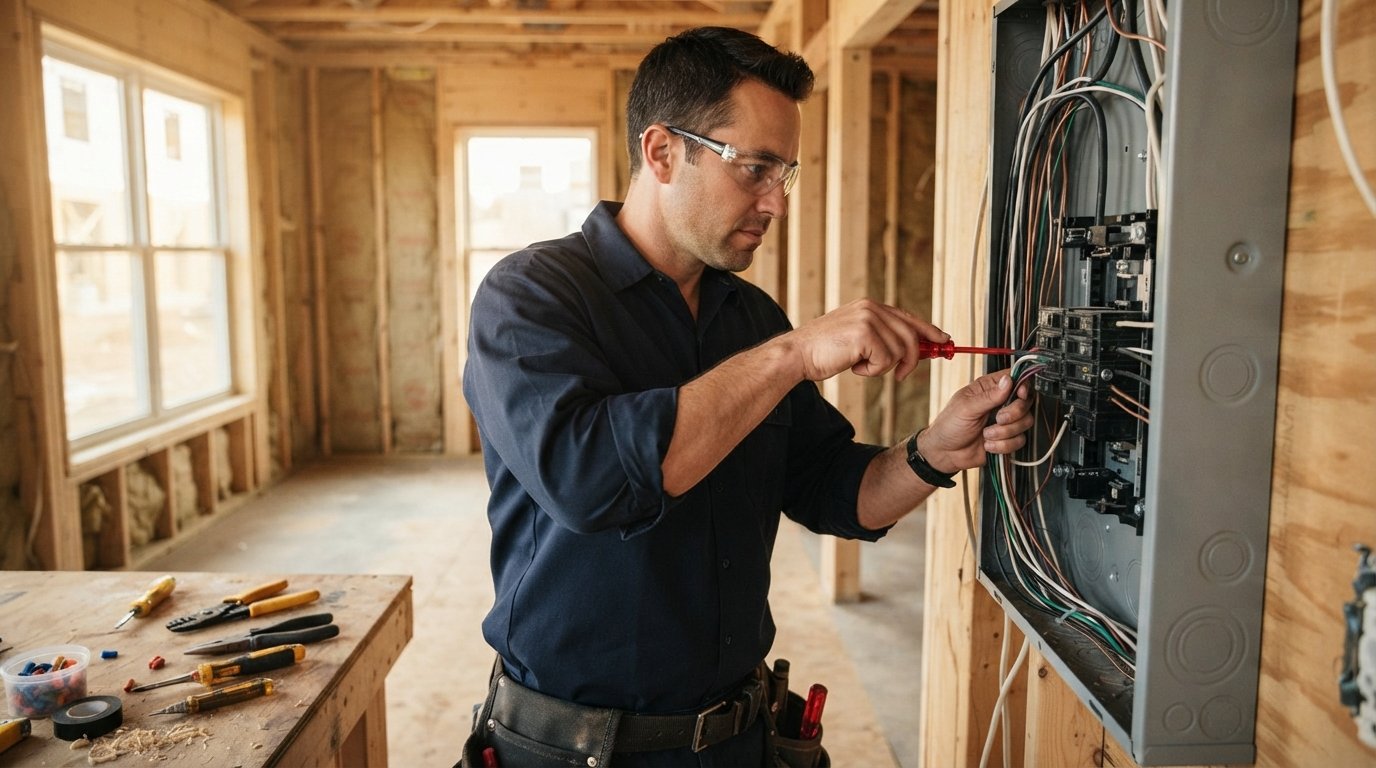
Electricians install, maintain, and repair electrical wiring, fixtures, and control systems in homes, businesses, factories, and infrastructure. Their work ranges from routine tasks like replacing outlets and running new circuits to complex jobs such as commissioning industrial machinery or troubleshooting three-phase power systems. Most electricians specialize in one area: residential electricians focus on homes, commercial electricians work in offices and retail spaces, and industrial electricians handle heavy equipment and manufacturing environments. Some also specialize in low-voltage systems, solar and energy storage, or line work on power distribution networks.
Work settings vary by specialty. Residential electricians often work in unfinished attics, crawl spaces, and new construction sites. Commercial and industrial electricians may work in active facilities where safety coordination is critical. Many electricians are employed by electrical contractors, while others work directly for manufacturers, hospitals, school districts, or government agencies. Self-employment is also common once an electrician gains enough experience and licensing. The job can be physically demanding, requiring climbing, lifting, and working in tight spaces, but it offers variety and a tangible sense of accomplishment. Safety is paramount, and electricians must follow strict codes, use protective equipment, and stay current with changing regulations.
Because electrical work touches nearly every building and industry, the career offers geographic flexibility and recession resistance. Even during economic downturns, maintenance and repair work continue. For people who prefer a hands-on career over a desk job, electrician work provides a clear pathway with measurable skill progression. If you are still weighing different healthcare or trade careers, you might also explore how to become a registered nurse, which shares a similar emphasis on licensing and ongoing education but in a clinical setting.
Step-by-Step Path to Becoming an Electrician
The traditional route to becoming an electrician involves a combination of classroom instruction and paid on-the-job training, typically through an apprenticeship. While requirements vary by state, the core steps are consistent across most of the country. Below is a practical framework you can follow, whether you are starting in high school or changing careers in your thirties or forties.
- Earn a high school diploma or GED. Most apprenticeship programs require at least a high school education. Focus on math, physics, and shop classes if available, as these build foundational skills for electrical work.
- Complete a pre-apprenticeship or electrical training program. Many community colleges and trade schools offer certificate programs that introduce electrical theory, safety, and code basics. These programs can improve your chances of landing a competitive apprenticeship.
- Secure an apprenticeship. Apprenticeships combine paid work with classroom instruction and typically last four to five years. You can find them through unions, contractor associations, and independent electrical contractors.
- Accumulate supervised work hours and pass the journeyman exam. After completing your apprenticeship, you will take a licensing exam to become a journeyman electrician. Requirements vary by state, but most demand a specific number of work hours and a passing score on a written and practical test.
- Consider master electrician licensing and specialization. After several years as a journeyman, you may pursue a master electrician license, which allows you to supervise other electricians and pull permits. Specializations in solar, industrial controls, or fire alarm systems can further boost your earnings.
Each step builds on the last, and the apprenticeship is the heart of the process. Apprentices earn while they learn, which means you can avoid heavy student debt while gaining a nationally recognized credential. Many states also require continuing education to renew licenses, ensuring electricians stay current with code updates and safety practices.
If you are also considering a longer academic path in a related technical field, you might compare the timeline with how long it takes to become a doctor. That path requires many years of formal education, whereas electrician training is more direct and earns income from the start.
Apprenticeships and Formal Training Programs
Apprenticeships are the gold standard for electrician training. They are sponsored by unions, contractor associations, and individual employers, and they combine structured on-the-job learning with related classroom instruction. The typical apprenticeship lasts four to five years and requires 8,000 hours of paid work experience plus roughly 600 hours of classroom study. Apprentices learn electrical theory, National Electrical Code (NEC) requirements, safety procedures, and practical wiring techniques. They progress through wage tiers as their skills grow, so earnings increase over time.
Competition for apprenticeships can be stiff, especially in urban areas. To stand out, consider completing a pre-apprenticeship program at a community college or technical school. These programs often cover basic electrical concepts, tool use, and safety, and they may provide credit toward an apprenticeship. Some states also offer electrical trainee cards that allow you to work under supervision before formal apprenticeship enrollment. When evaluating training options, look for programs accredited by recognized bodies and those with strong job placement rates. You can use CollegeDegree.Education to explore accredited colleges and degree programs that align with your goals, including electrical and construction management pathways.
Beyond apprenticeships, some electricians pursue associate degrees in electrical technology or construction management. These degrees can accelerate advancement into supervisory or estimating roles, but they are not required for entry-level work. The most important factor is hands-on experience and a solid understanding of the NEC. Whichever route you choose, prioritize programs that emphasize safety and code compliance, as these are non-negotiable in the field.
Licensing and Certification Requirements
Licensing requirements for electricians vary by state and sometimes by municipality. Most states require electricians to be licensed, and the typical progression is from apprentice to journeyman to master electrician. To sit for a journeyman exam, you generally need to document a certain number of supervised work hours (often 8,000) and complete an approved apprenticeship or equivalent training. The exam typically covers electrical theory, code knowledge, and practical problem solving. Once licensed, journeyman electricians can work independently but may still be supervised on certain projects.
Master electrician licenses usually require several years of experience as a journeyman plus a more advanced exam. Master electricians can pull permits, design systems, and supervise other electricians. Some states also offer specialty licenses for low-voltage work, fire alarm systems, or solar installation. Certification through organizations like the National Electrical Contractors Association (NECA) or the Independent Electrical Contractors (IEC) can enhance your credentials but is not always mandatory.
Continuing education is a common requirement for license renewal. Electricians must stay updated on NEC changes, which are published every three years. Many states require a specific number of continuing education hours per renewal cycle. Failing to maintain your license can result in fines or loss of work eligibility, so it is important to track deadlines and complete courses through approved providers. Before enrolling in any training program, verify that it is recognized by your state licensing board.
Key Skills and Qualities for Success
Successful electricians combine technical knowledge with practical problem-solving and strong work habits. Because electrical work carries safety risks, attention to detail and adherence to code are critical. Electricians must also be comfortable with math, especially algebra and geometry, for calculating loads, voltage drops, and conduit bending. Physical stamina and manual dexterity are important, as the job often involves lifting, climbing, and working in awkward positions.
Beyond technical skills, electricians need good communication and customer service abilities, particularly in residential and commercial service work. They must explain problems and solutions clearly to clients and work effectively as part of a team. Troubleshooting skills are essential: when a system fails, electricians must systematically isolate the cause and implement a safe repair. Time management and organization help electricians complete projects on schedule and within budget. Finally, a commitment to lifelong learning is vital, as technology and codes evolve. Electricians who embrace new tools, such as smart building controls and renewable energy systems, position themselves for higher-paying opportunities.
For those who enjoy working with their hands and solving real-world problems, the electrician trade offers a rewarding career with clear advancement paths. It also provides a foundation for related fields like electrical engineering, which you can explore if you are interested in design and analysis rather than installation. The skills you build as an electrician are transferable and in demand across many industries.
Career Outlook, Earnings, and Advancement
According to the U.S. Bureau of Labor Statistics, employment of electricians is projected to grow faster than the average for all occupations over the next decade. Demand is driven by construction activity, maintenance needs, and the transition to renewable energy and electric vehicles. As experienced electricians retire, opportunities for new entrants will remain strong. Earnings vary by location, experience, and union status. Apprentices start at lower wages that increase with skill level, while licensed journeyman and master electricians earn significantly more. Many electricians also supplement their income with overtime and emergency service calls.
Advancement opportunities include supervisory roles, project management, estimating, and business ownership. Some electricians move into inspection, teaching, or sales for electrical equipment manufacturers. Specializing in high-demand areas such as solar photovoltaic systems, energy storage, or industrial automation can lead to higher pay and job security. Union electricians often enjoy benefits such as health insurance, pensions, and structured wage increases. Non-union electricians may have more flexibility in negotiating wages and choosing projects.
Because electricians are essential to modern infrastructure, the career offers stability and a sense of purpose. The work is challenging but rewarding, and the skills you acquire are tangible and lasting. Whether you aim to run your own contracting business or become a master electrician in a large industrial facility, the path provides multiple routes to success.
Frequently Asked Questions
How long does it take to become an electrician?
Typically, it takes four to five years to complete an apprenticeship and become a journeyman electrician. Some states allow alternative paths, such as combining a technical degree with supervised work experience, which may shorten the timeline slightly. After becoming a journeyman, you can pursue a master electrician license with additional experience.
Do I need a degree to become an electrician?
No, a degree is not required. A high school diploma or GED is the minimum educational requirement. Most training happens through apprenticeships or technical certificate programs. However, an associate degree in electrical technology can be helpful for advancement into management or engineering roles.
Is electrician work dangerous?
Electrical work carries risks, including shock, burns, and falls. However, with proper training, adherence to safety codes, and the use of personal protective equipment, electricians can manage these risks effectively. Safety is a core component of all apprenticeship programs.
Becoming an electrician is a journey that rewards dedication and careful work. By following the steps outlined here, you can build a stable and fulfilling career in a field that is essential to every community. Start by researching apprenticeship opportunities in your area, connecting with local contractors, and exploring training programs that fit your schedule and goals.
Sponsored school listings are unavailable
This block is reserved for sponsored schools from the education listing partner. That connection is not set up for this site, so no school names, program offers, or request form can be shown.