
How to Become a Firefighter: Training and Career Steps
Becoming a firefighter requires focused training and certification. Follow these steps to meet requirements, complete an academy, and launch your career.

By Jack Adler
Becoming a firefighter is one of the most respected and rewarding career paths in public safety, combining physical challenge, community service, and job stability. The journey demands careful planning, from meeting basic eligibility requirements to completing rigorous training and certification. For those wondering how to become a firefighter, the process is structured but achievable with the right preparation. This guide walks you through each stage, from understanding the role to landing your first job.
Understanding the Firefighter Role
Firefighters do far more than fight fires. They respond to medical emergencies, vehicle accidents, hazardous material spills, and natural disasters. They also perform fire prevention inspections, educate the public, and maintain equipment. The work is physically demanding and often involves long shifts, including nights and weekends. Most firefighters work for municipal fire departments, though some work for federal agencies, airports, or private companies.
The job outlook for firefighters is steady, with a projected growth rate of about 4 percent through 2032, according to the Bureau of Labor Statistics. Competition can be strong in urban areas, so candidates who invest in relevant education and certifications often have an edge. Many departments now prefer or require candidates to have some college coursework or a degree in fire science or a related field. If you are exploring other public safety careers, you might also consider the path to becoming a registered nurse, which offers similar rewards in healthcare.
Before committing to the fire service, it helps to understand the daily realities. Firefighters need mental resilience, teamwork skills, and the ability to stay calm under pressure. They must also pass regular fitness tests and medical evaluations. A single call can range from a false alarm to a life-threatening emergency, so adaptability is key.
Basic Requirements to Become a Firefighter
While specific requirements vary by department, most fire departments in the United States share a common set of minimum qualifications. Meeting these is the first concrete step toward a firefighting career.
- Age: Typically at least 18 years old, sometimes 21.
- Education: High school diploma or GED; many departments prefer college coursework.
- Driver's license: Valid state-issued license with a clean driving record.
- Physical fitness: Ability to pass a physical ability test and medical exam.
- Background: Clean criminal record and drug screening.
Some departments also require EMT or paramedic certification before applying, and many give hiring preference to candidates with fire science degrees or prior volunteer experience. It is wise to research the specific requirements of the departments you plan to apply to, as they can differ significantly.
Educational Paths and Training Programs
Formal education is increasingly important in the fire service. While a high school diploma is the minimum, earning an associate or bachelor's degree in fire science, emergency management, or public administration can improve your chances of promotion and specialization. Many community colleges and online programs offer fire science degrees that cover fire behavior, building codes, emergency medical services, and leadership.
For those considering a healthcare career with similar hands-on patient care, exploring how long it takes to become a doctor can provide perspective on the length of training required for advanced medical roles. Firefighters often work closely with medical professionals, so understanding the broader emergency response system is valuable.
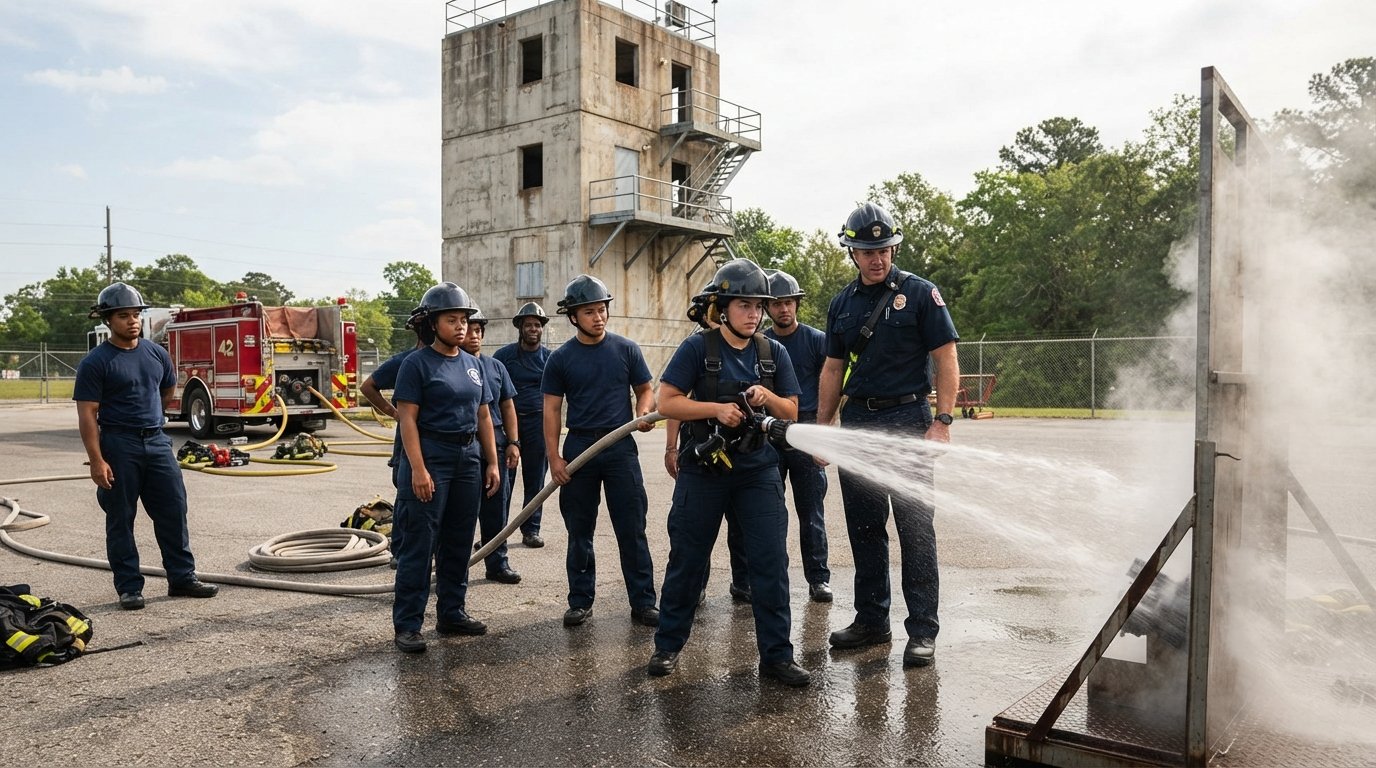
Training academies are another essential component. Once hired, recruits typically attend a fire academy that lasts 12 to 24 weeks. Academy training covers firefighting techniques, hazardous materials handling, rescue operations, and physical conditioning. Some departments run their own academies, while others send recruits to regional or state-run programs. Graduating from an academy is a major milestone and often leads to state certification.
In addition to degree programs, certificate courses in fire science and emergency medical services can be completed in a year or less and provide a quick entry into the field. Many online and campus programs allow flexible scheduling for working adults. To explore accredited programs and find financial aid options, resources like Scholarship.Education offer scholarship databases and application guidance for students in the US and abroad.
Certifications and Licenses
Certifications are the backbone of a firefighting career. Most states require firefighters to hold certifications in areas such as Firefighter I and II, Hazardous Materials Awareness and Operations, and Emergency Medical Technician (EMT). These certifications are typically earned through state-approved training programs and must be maintained through continuing education.
EMT certification is often a prerequisite for employment and is sometimes required just to apply. Paramedic certification is even more advanced and can lead to higher pay and specialized roles. Many fire departments also require or prefer candidates with certifications in technical rescue, wildland firefighting, or fire inspection. The National Fire Protection Association (NFPA) sets many of the standards that states and departments follow.
Obtaining these certifications requires passing written and practical exams. Some programs are offered through community colleges, while others are provided by fire academies or state fire training offices. It is important to verify that the program you choose is accredited and recognized by the departments you are targeting.
The Hiring Process: From Application to Academy
The hiring process for firefighters is competitive and multi-stage. It typically begins with a written exam that assesses mechanical reasoning, math, and reading comprehension. Candidates who pass may then take a physical ability test that simulates firefighting tasks such as dragging hoses, climbing ladders, and carrying equipment. Following these tests, departments conduct oral interviews, background checks, medical exams, and psychological evaluations.
Once hired, recruits enter the fire academy. The academy is physically and mentally demanding, with long days of training and study. Recruits learn to use self-contained breathing apparatus (SCBA), perform search and rescue, and extinguish live fires. Upon graduation, they are often placed on probation for a year while they complete on-the-job training.
Because competition can be fierce, many candidates gain experience through volunteer firefighting or working as EMTs before applying to career departments. Some departments also offer lateral entry for experienced firefighters from other jurisdictions, which can streamline the process.
Advancing Your Firefighting Career
Firefighting offers numerous opportunities for specialization and advancement. After gaining experience, firefighters can pursue roles in fire investigation, hazardous materials response, technical rescue, or fire prevention education. Promotions to driver/operator, lieutenant, captain, or battalion chief require additional training and often a degree in fire science or a related field.
Continuing education is a constant in the fire service. Firefighters must stay current with new equipment, building codes, and emergency response techniques. Many departments support further education by offering tuition reimbursement or flexible schedules. Earning a bachelor's degree can open doors to administrative roles, training positions, or even fire chief.
For those interested in the broader public safety landscape, careers in law enforcement or emergency management can complement firefighting experience. The skills you build, such as leadership, decision-making, and crisis management, are transferable to many other fields.
Physical and Mental Preparation
Physical fitness is not just a hiring requirement; it is a lifelong commitment for firefighters. The job demands cardiovascular endurance, strength, and flexibility. Candidates should start a structured fitness routine well before applying, focusing on cardio, weight training, and functional movements like carrying and climbing.
Mental preparation is equally important. Firefighters witness traumatic events and must cope with stress and fatigue. Developing healthy coping strategies, such as exercise, peer support, and professional counseling, can help build resilience. Many departments offer employee assistance programs and mental health resources.
Volunteer firefighting is an excellent way to test your interest and gain hands-on experience. It also provides training that can count toward certification and improves your chances of being hired by a career department.
Key Takeaways for Aspiring Firefighters
Becoming a firefighter requires a blend of education, physical fitness, and determination. Here are the most important steps to remember:
- Meet basic eligibility requirements (age, education, clean record).
- Earn relevant certifications, especially EMT and Firefighter I/II.
- Complete a fire science degree or certificate program to stand out.
- Pass written, physical, and oral exams during the hiring process.
- Graduate from a fire academy and complete probation.
Each step brings you closer to a career that offers stability, camaraderie, and the chance to make a real difference. While the path is challenging, the rewards are substantial.
The fire service values diversity and seeks candidates with a wide range of backgrounds and skills. Whether you are a recent high school graduate or a career changer, there are pathways to entry. Research departments in your area, connect with local firefighters, and consider volunteer opportunities to build your resume.
For more guidance on public safety careers and educational programs, explore the resources available on Careers.org, where you can compare sponsored online and campus programs and request information from schools. Taking the first step today can set you on the road to a fulfilling career as a firefighter.
Sponsored school listings are unavailable
This block is reserved for sponsored schools from the education listing partner. That connection is not set up for this site, so no school names, program offers, or request form can be shown.